Meet the Leather Master Behind El Fenn’s Bedroom Floors
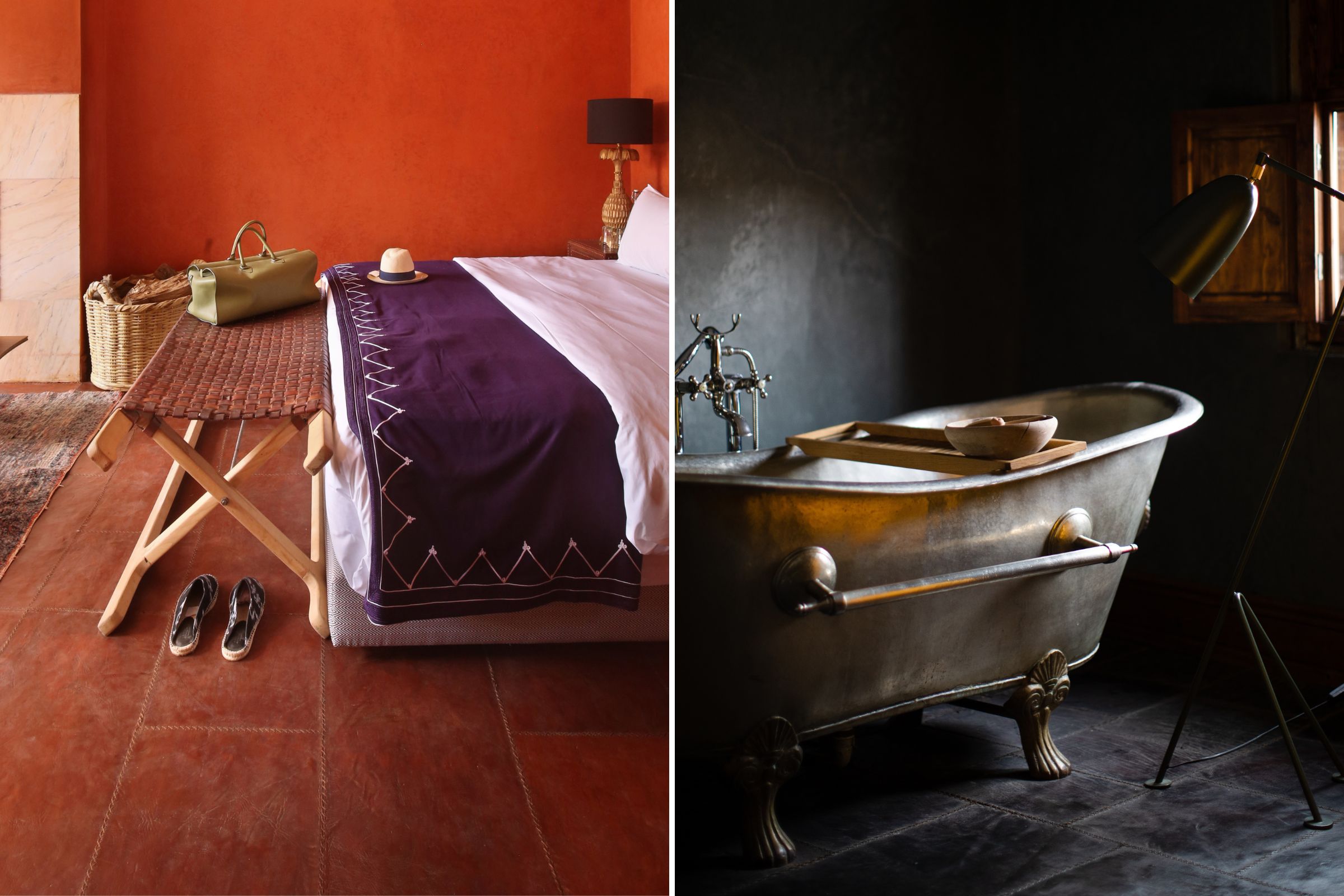
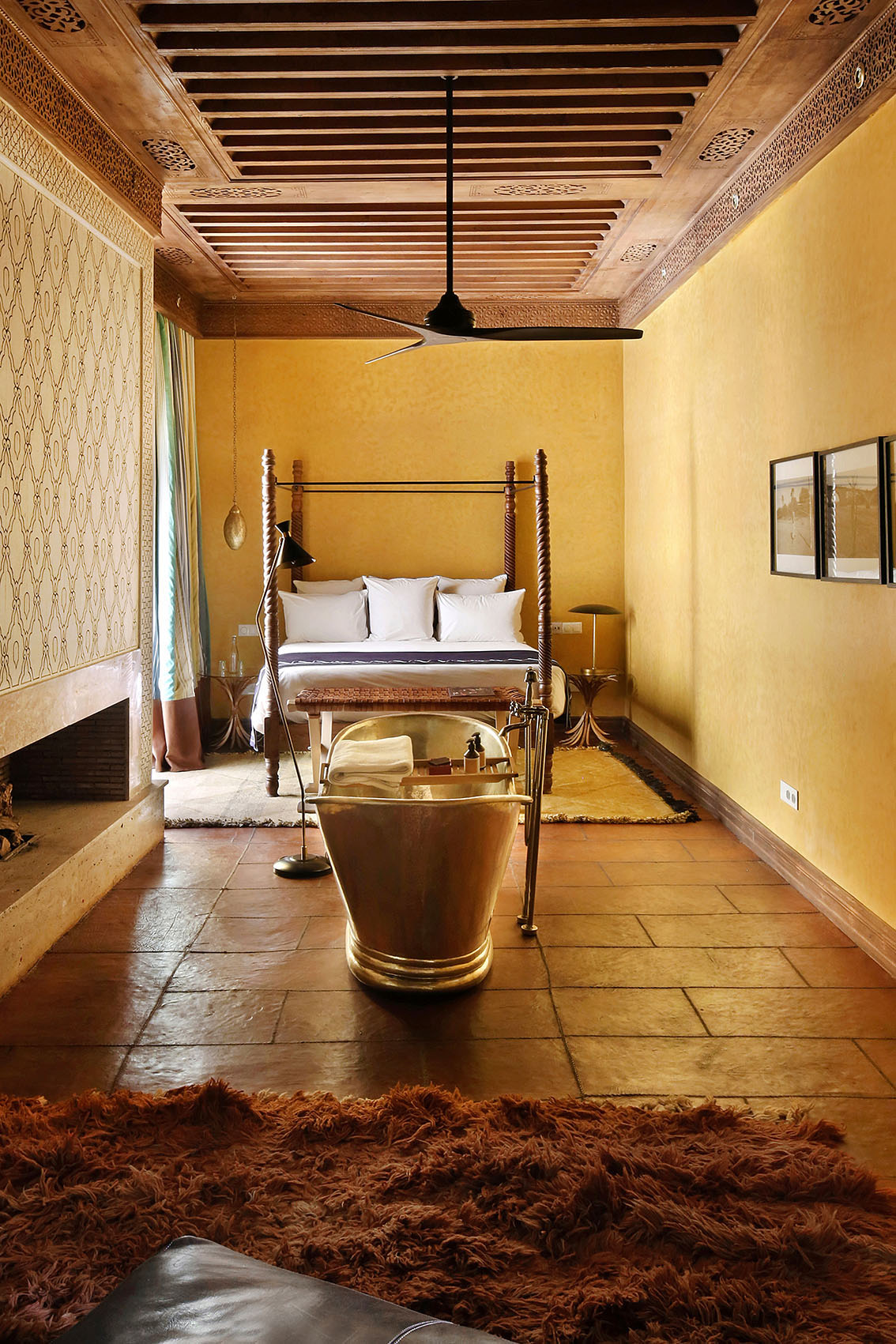
The leather floors at El Fenn are a key element of our look, beloved by many guests – and, like so many aspects of our rooms, handmade by a team of expert artisans.
A THOUSAND YEARS OF HISTORY
The floors have been a feature here ever since we opened in 2004. When we were developing the look for our first rooms back then, our aim was to showcase all the materials and artisanal skills that Morocco is famous for – from hand-polished tadelakt plaster to hand-carved cedar wood.
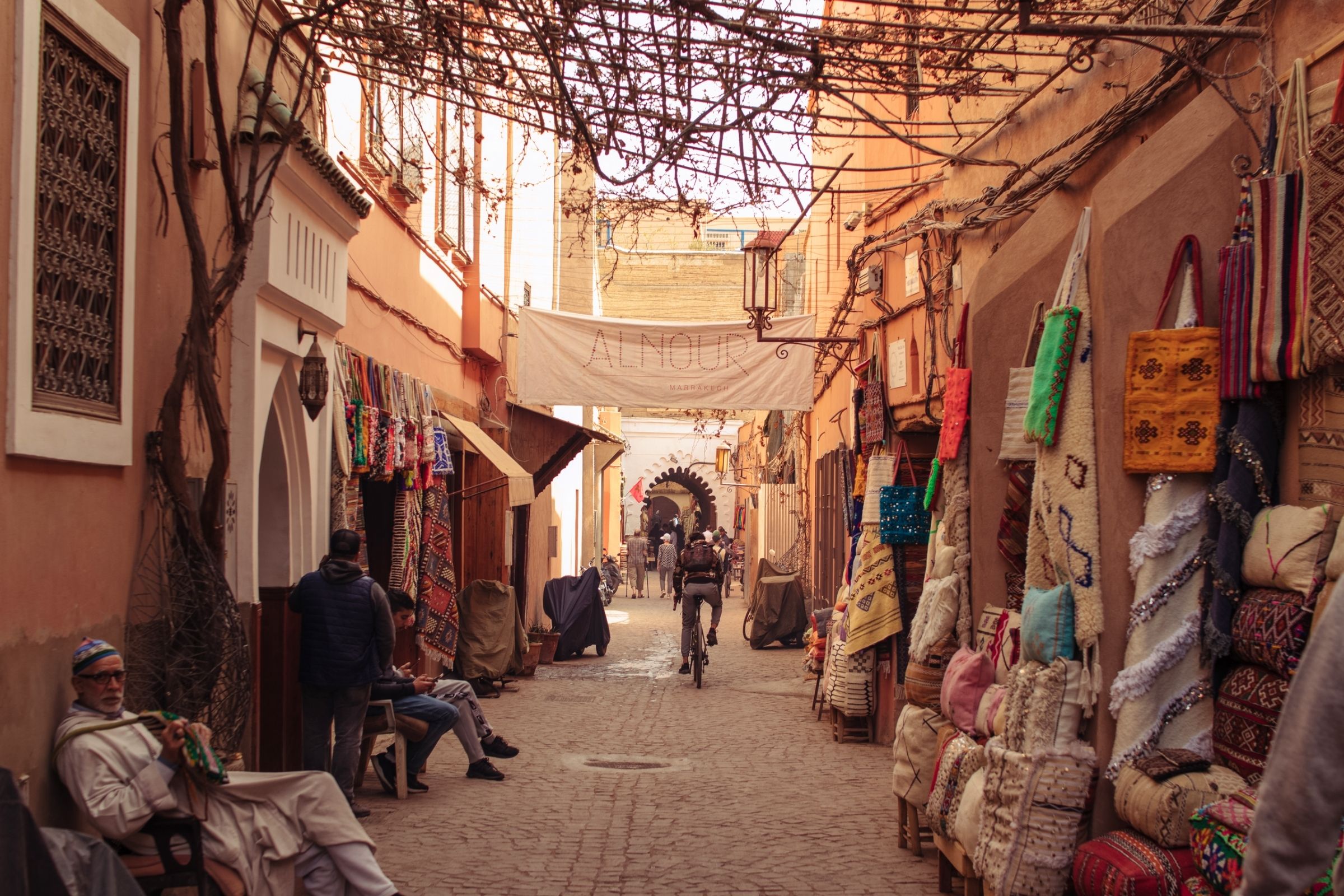
Leather was also on our list because Marrakech is famous for it. The leather artisans were the first to arrive in the city when it was established over a thousand years ago and they continue to work in the souk today. Other Moroccan cities such as Fez have far larger tanneries, but leather remains a key product for Marrakech. So it was important for us to harness all that history in our room decor in some way.
THE IDEA
The most obvious way was via decor objects like pouffes, and small pieces of furniture such as stools. But then we decided to take the idea a step further. Morocco is famous for its beautiful tiled floors. Why not use leather to create a different kind of floor tile?
We took inspiration from a photo of the studio of German artist Joseph Beuys which had leather floors. Moroccan leather is famous for its pliability and softness. It’s also easily pigmented so we knew it would be a great material to work with.
Then we needed to find a team of people who could install this specialist flooring. As ever, we found them in our local neighbourhood. The artisans we work with here at El Fenn are not specialists who travel from miles around. They are the specialists living close by, our friends and neighbours.
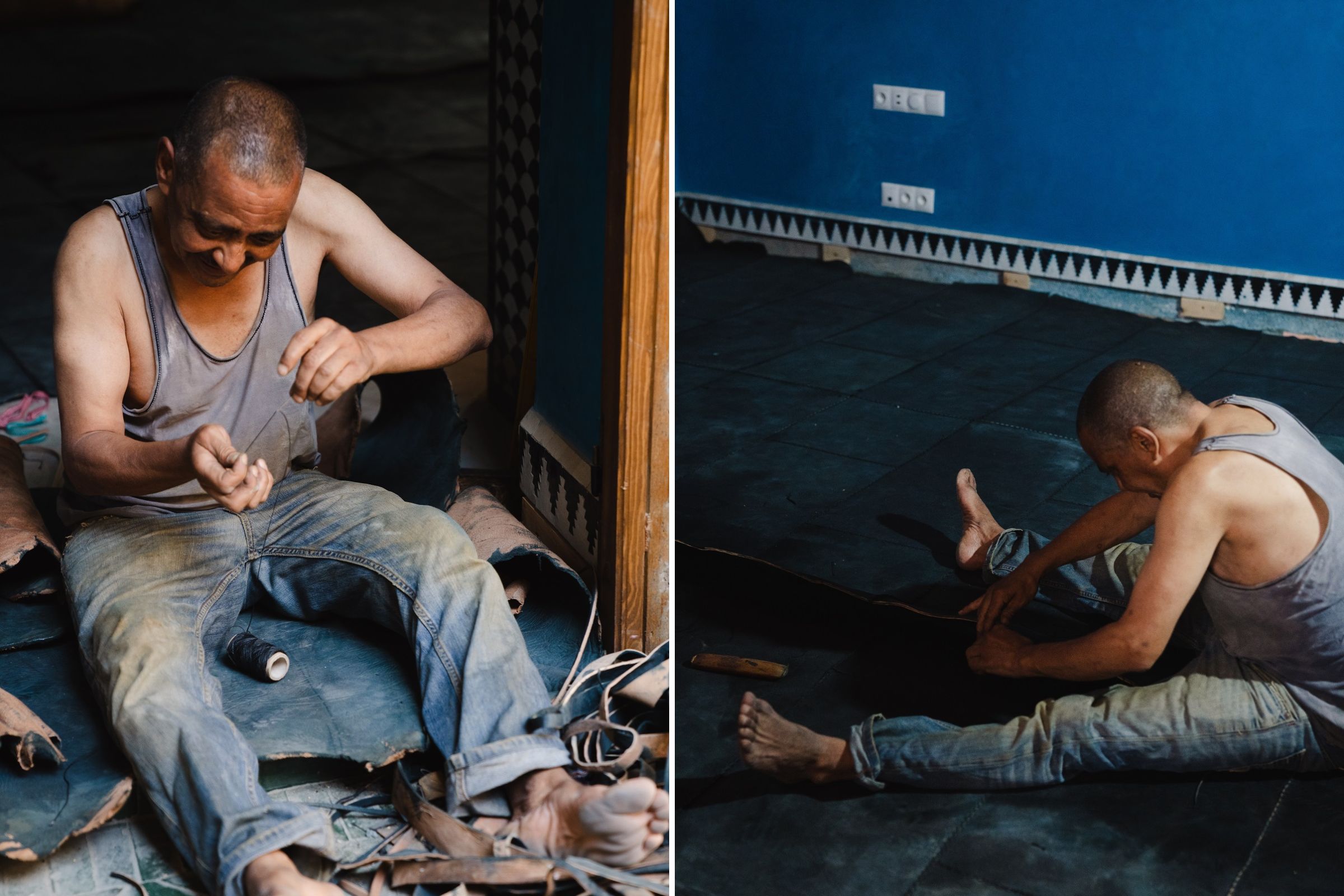
In this series, we meet some of the artisans we work with. Abdellah Buolksout, 66, is a master leatherworker who has worked at El Fenn for more than 20 years – hand-stitching the leather floors in many of our rooms and suites.

MEET ABDELLAH, THE EL FENN MASTER LEATHERWORKER
I was born in the Ourika Valley and my father died when my mother was still pregnant with me. When she also died a few years later, I moved with my sisters to live with my uncle in Marrakech who wanted me to start working to help the family. Aged 10, I began helping out in the leather souk, assisting the workers there with sweeping and tidying, and earning five dirhams a week. But all the while, I was watching and learning. By the age of 15, I was trained in making bags and belts. By 31, I had started my own shop and still make bags and belts today.
I started work at El Fenn in 2003 before the hotel was even open, back when the first buildings were being renovated. Vanessa [Branson – El Fenn’s co-founder] had an idea to create a leather floor and I’d met one of the people working on the project at my shop in the souk. They asked if it would be possible to do a leather floor and although I hadn’t done it before, I said of course. I knew we could find a way.
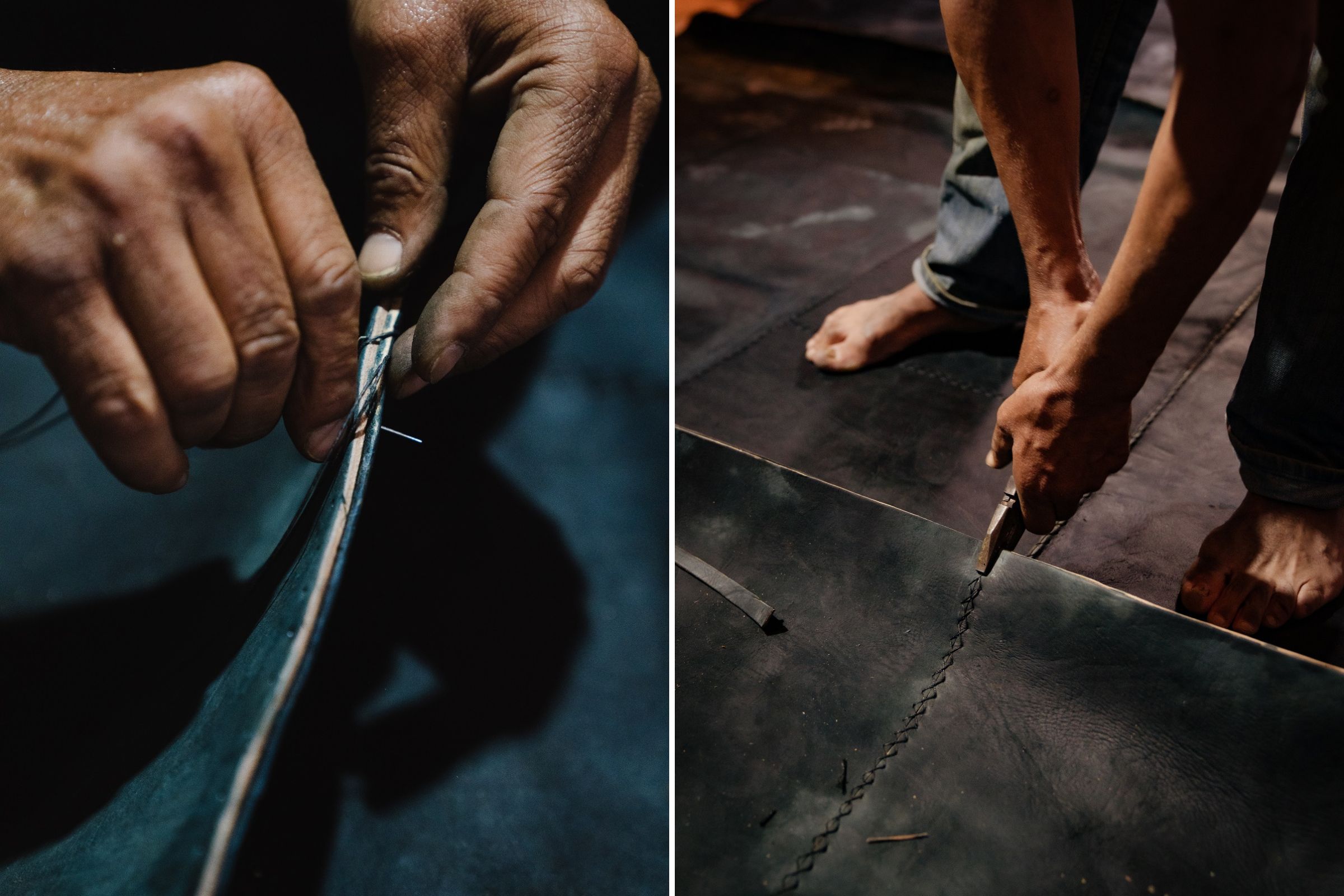
While cow leather is often used in Morocco, I decided to use camel leather for the El Fenn floors because it’s such a strong leather. Knowing it would need to be fixed to the floor, I developed a technique – layering heavy glue and thick lining paper to create a solid base. Then, and now, I make all the tiles myself out of camel leather which is dyed by hand using natural pigments before being cut. The tiles are then laid and hand stitched together in the room we’re working on to make sure it fits perfectly. And we use a saddle-stitch technique because if one thread breaks, the others hold so it’s stronger than machine stitching.
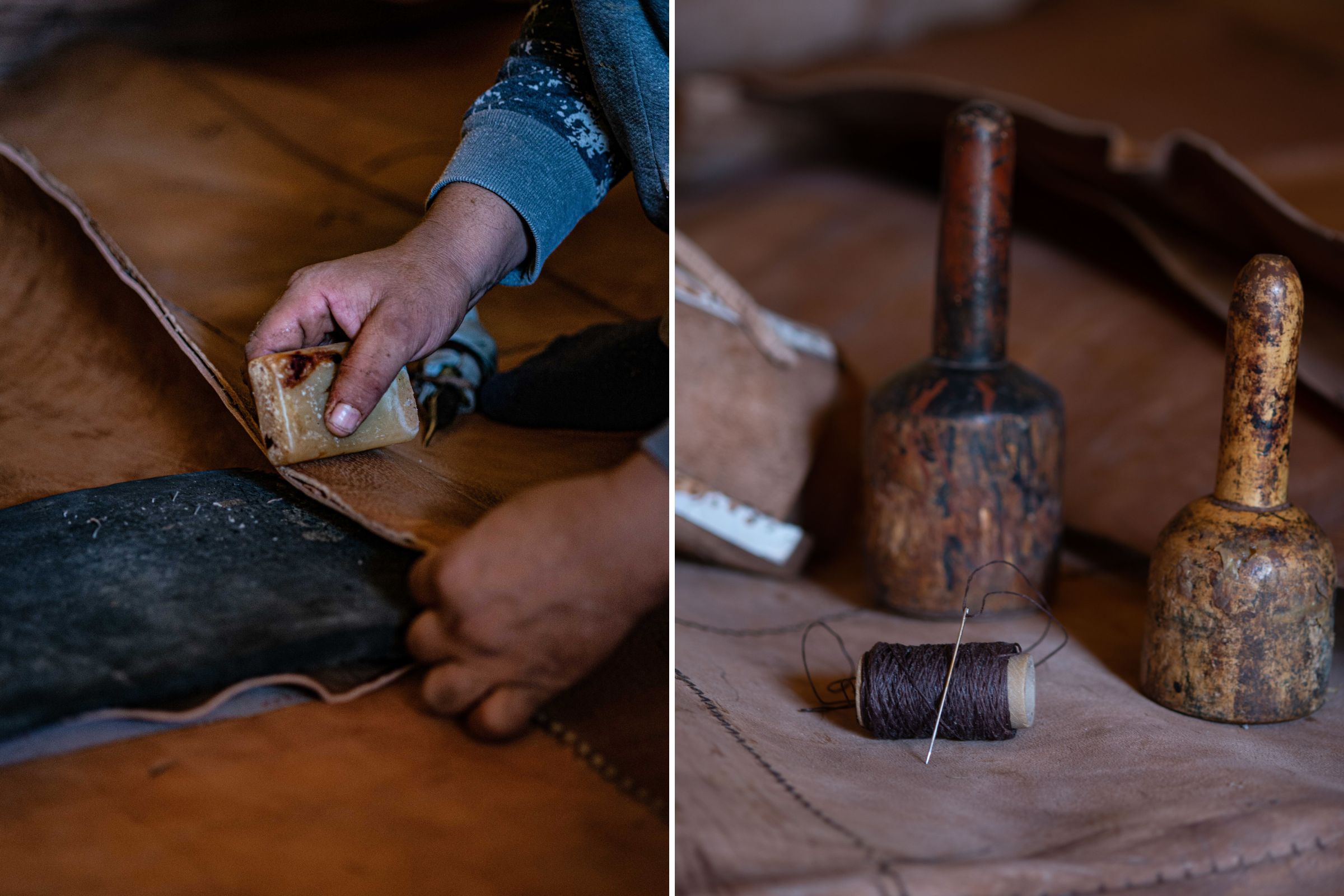
I’ve worked on many bedrooms here at El Fenn over the years and appreciate that everyone here respects artisans. I can also share the work I’m given with other artisans which means everyone benefits and that’s important to me because I also train young leatherworkers.
Over the decades, I’ve trained many master craftsmen – who are known as mellems. How long the training is depends on how intelligent they are. Some people come, work five months and become very professional. There are others who work ten years and still don’t know how to do anything. But if you want to do something with your heart, you learn easily.
Being an artisan is my life. In the beginning my uncle told me to work but the more I relaxed into it, the more I enjoyed it. It’s been more than 50 years now and I still like using my hands to make things. It’s hard work. But we think the result is worth it. Our leather floors are warm, tactile – and have that hint of luxury we always want our guests to experience when they stay with us.
DISCOVER MOROCCAN LEATHER FOR YOURSELF
If you want to know more about Moroccan leather, a hide auction is held each day around 11am in Souk Naal. Or you can visit the Bab Debbagh tannery where skins are separated, soaked and treated using traditional techniques. Be warned – pigeon dung is used during the process so it can be a sensory overload.
MEET THE MASTER ARTISANS THAT SHAPE EL FENN
Ali is one of several master craftsmen whose work shapes El Fenn. Meet Mohammed, the mellem behind our carved plasterwork, and Ali, the master zellige tiler.