GUIDE TO THE DISTRICTS OF MARRAKECH
Think Marrakech is all medina? Think again. The historic centre of the city is key but there are also many other areas of the city to explore – and each one has its own personality. Here’s our guide to the districts of Marrakech and what to find in them.
GUELIZ

Ten minutes from El Fenn in a cab – or about 20 minutes walk – you’ll find the buzzing streets of Gueliz. The ‘Ville Nouvelle’ district was developed by the French during the protectorate in the first half of the twentieth century who laid out a grid of streets to house administrative and residential development. Today, the area is packed with shops and eating places so it’s a great place to spend a morning or afternoon and see a different side of Marrakech.
Start with a traditional ‘noss nos’ (half coffee/half milk) at one of the many cafes in Gueliz, head to Blue Ribbon for a matcha and pastry, or go classic at Grand Cafe de la Poste. Originally opened in the 1920’s, it still channels the original art deco vibes today: black and white chequered floor, palms and overhead fans. For lunch or dinner, our picks include Farmer’s, Sahbi Sahbi and Plus 61.
The area is also home to some great fashion and home shopping. Browse Norya Ayron’s collection of jewel-toned kaftans and separates, Lalla’s range of gorgeous bags and totes, or Attika’s shoes – everything from suede loafers in a rainbow of colours to leopard Mary Janes. Pick up original photography and home accessories at Marie Bastide, shop for custom furniture at Some Slow Concept or stop at the Bloom Room for coffee, flowers and a small homeware edit.
HIVERNAGE

Hivernage means ‘wintering’ in French and this area to the west of the medina was built during the Protectorate as a retreat for Europeans in search of winter sun. Head out of the medina through the ancient Bab Jdid gate and you’ll find Hivernage on the other side.
Today Hivernage is the area to visit for nightlife because the restaurants and clubs open late. La Comptoir Darna is a Marrakech institution – after dinner, the atmosphere ramps up with a candle dancing show before the DJ starts playing upstairs. If you’re in the mood for live music and dancing, head to L’Epicurien – part of the Es Saadi complex. There’s a casino there too, as well as Teatro if you want to go on to sunrise. Elsewhere, the Lotus club also hosts dinner, dancing and a show, or head to La Palace for dinner where the upstairs vibe is French brasserie, the downstairs dining room moody candlelight.
SIDI GHANEM
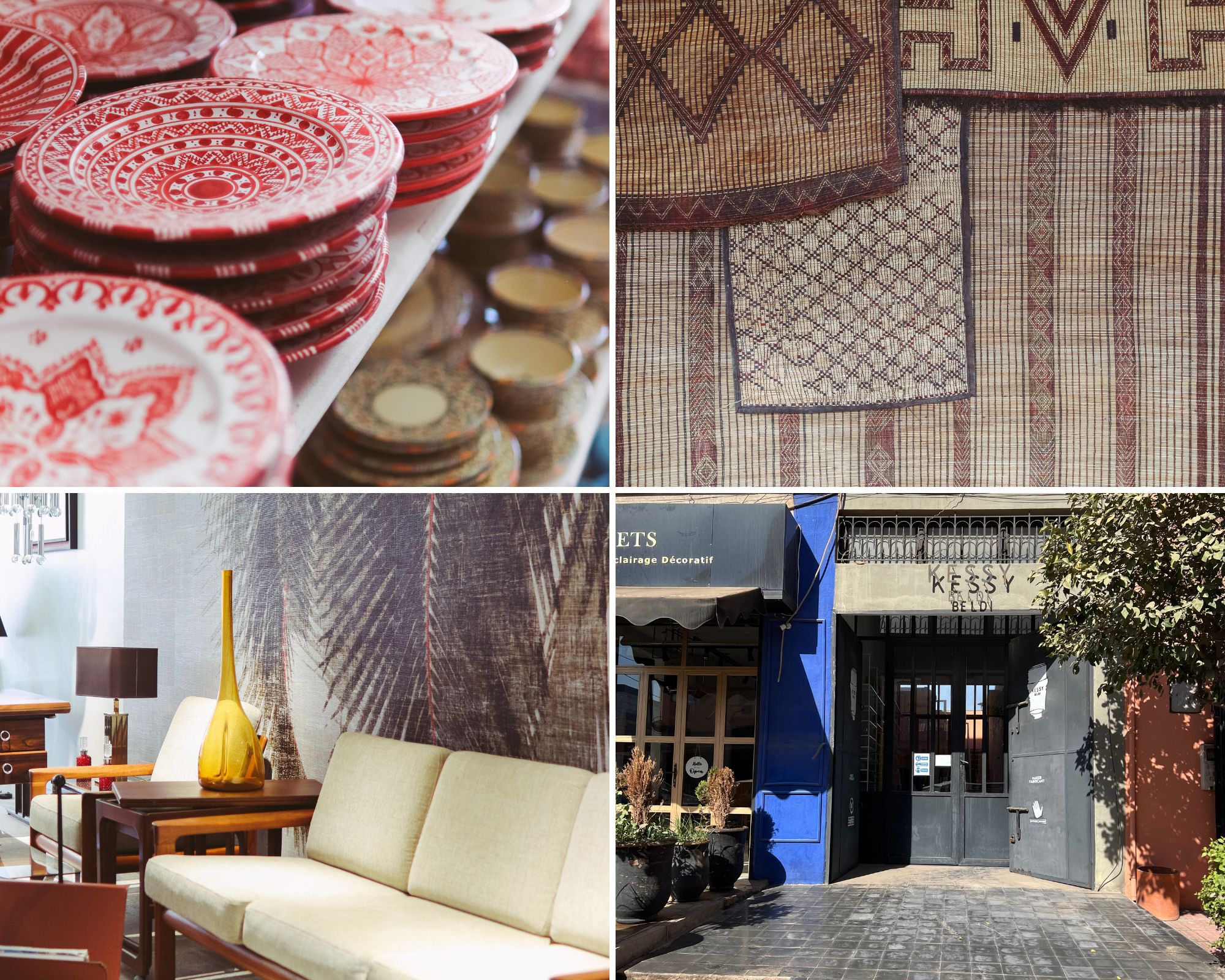
This former industrial area about 20 minutes by car from the medina is now home to an ever more exciting shopping scene with large ateliers that are home to some of Marrakech’s most renowned modern makers. As well as shops and showrooms, there are places to eat and art galleries too. It’s worth booking a car so you can be driven from place to place.
When it comes to filling up your wardrobe, Isabelle Topolina’s atelier in Sidi Ghanem is filled with original pieces that rework vintage fabrics into fun, but elegant, pieces with a retro feel. Or if rugs are at the top of your list Studio Lid is one of the most exciting destinations in Marrakech. Browse vintage pieces, or let your imagination run wild to create new designs that can be custom made in a rainbow of colours and any dimensions.
Youness Serghini is the eighth generation of his family to make artisanal pottery that’s exported all over the world and you can see his artisans at work as they create everything from plates to giant garden pots in their workshop. Either buy from existing stock or order custom made. Heritage Berbere is also a great stop for perfumes and room fragrances.
We’ve done a deep dive into Sidi Ghanem here.
MAJORELLE
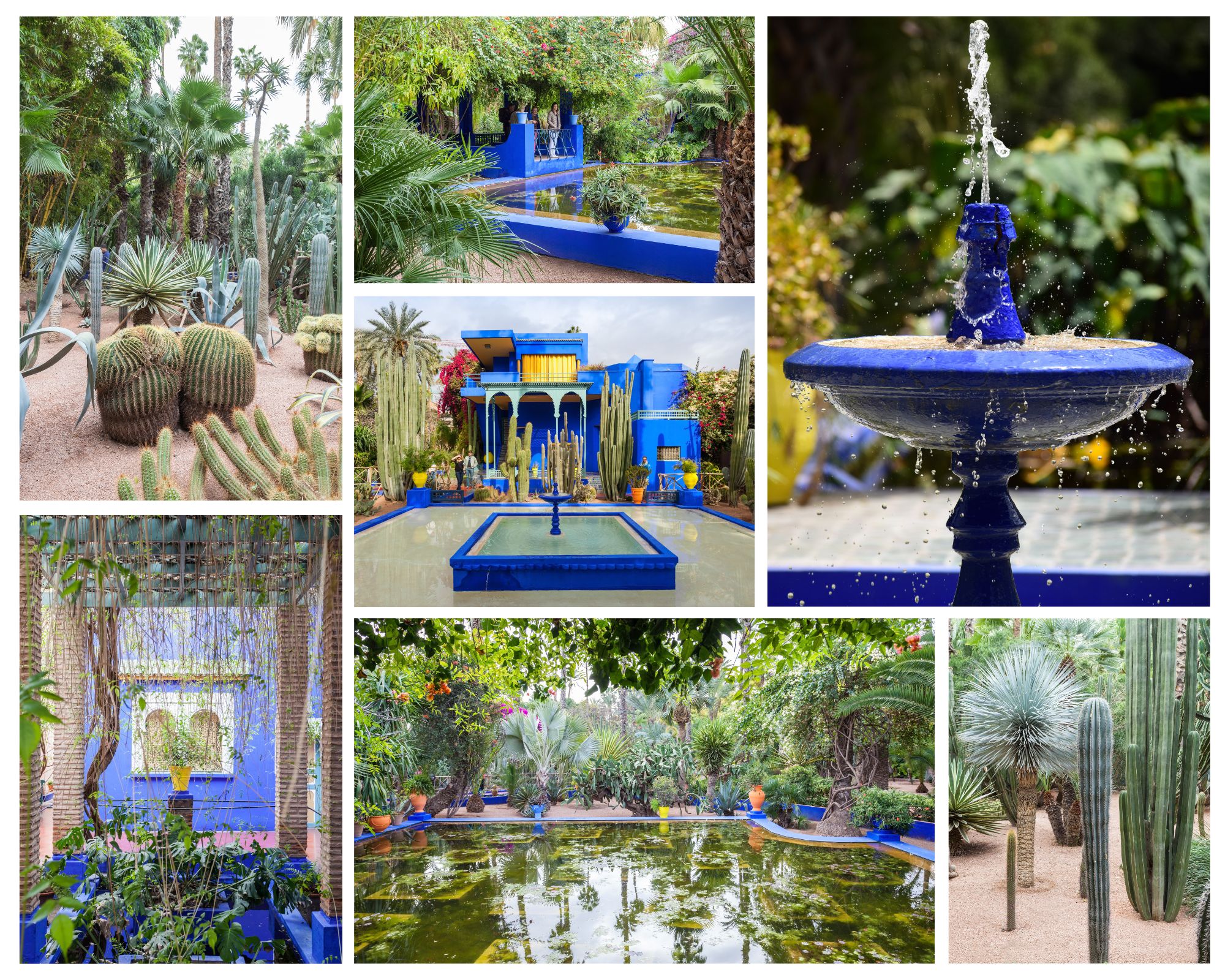
French painter Jacques Majorelle started creating his famous garden almost a hundred years ago after being captivated by Morocco’s beauty and moving to Marrakech. After his death however in 1962, the beautiful oasis he had created fell into disrepair. Then in 1980, Yves Saint Laurent and his partner Pierre Berger bought Majorelle’s property, restored the land and opened it to the public. Today it’s one of Marrakech’s most iconic landmarks, filled with rich planting and fish ponds set against distinctive ‘Majorelle blue’ walls.
Get there early to avoid the crowds and make sure to stop in the charming cafe for a juice or coffee before heading to the Yves Saint Laurent Museum which was opened in 2017 as a tribute to the iconic designer, his history and love affair with Morocco. Even the building itself is a work of art and well worth a visit.
There are also some great shops close by. 33 and Moro are both filled with fashion and home and you can pick up pretty tableware at Chabi Chic.
MEDINA

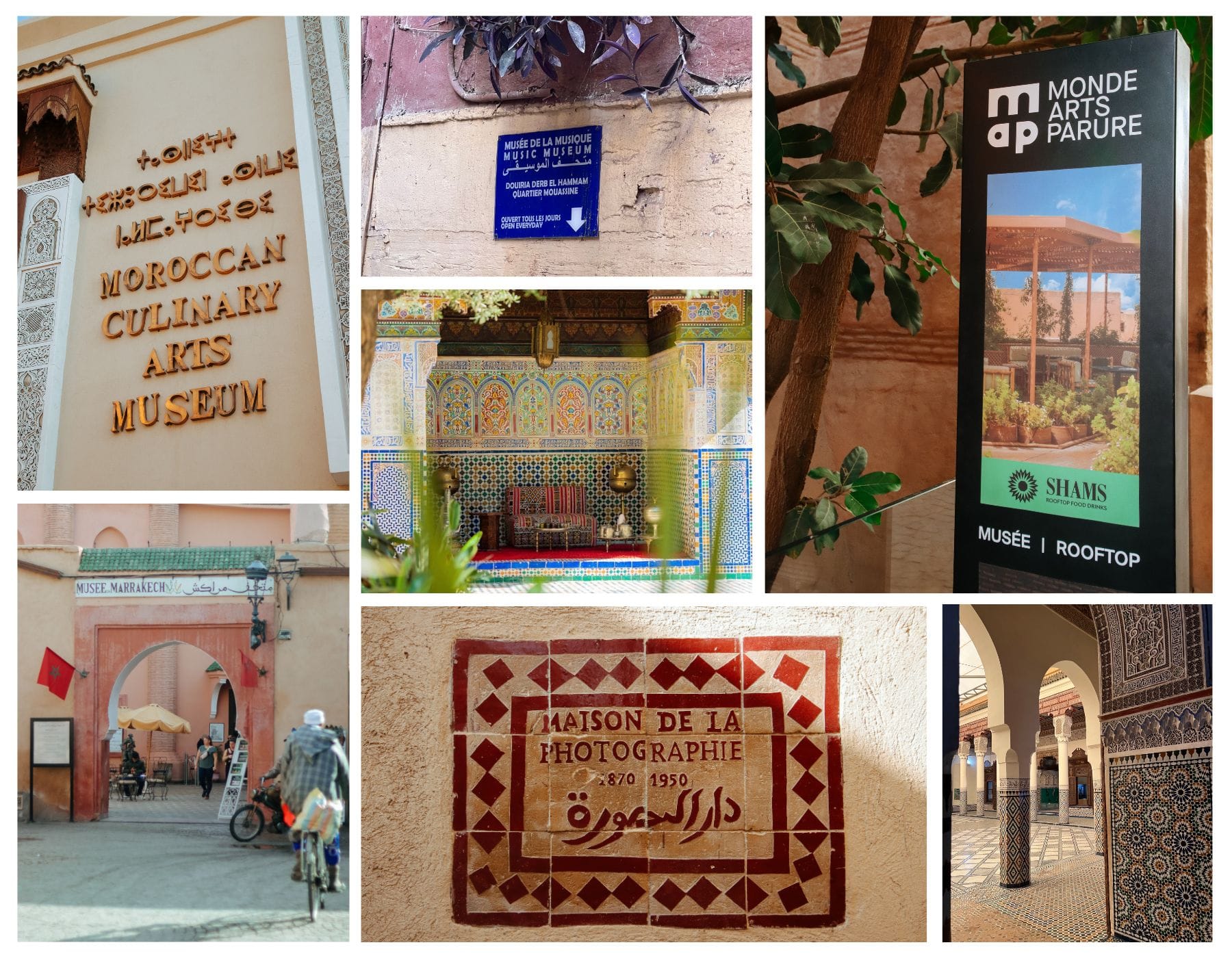
The ancient Marrakech medina is the walled part of the city and El Fenn is perfectly located just five minutes walk from the centre of the souk where you’ll find artisans at work. Founded in 1070 when Almoravid warrior Abu Bakr ibn Umar crossed the Atlas Mountains in search of a permanent capital, Marrakech is rich in fascinating history and culture and there are numerous museums to help you discover it.
All roads lead to the famous Djemaa el Fna square, which has been listed by UNESCO as part of its “Masterpieces of the Oral and Intangible Heritage of Humanity” programme thanks to the musicians, storytellers, acrobats, snake charmers and henna artists who gather there. It comes alive every night around sunset and is filled with stalls where you can sample street food or drink some fresh mint tea.
Elsewhere, the medina is packed with so many shops, sights and restaurants, it can be hard to know where to start. Here’s our pick of places that are within a short walk of El Fenn. We also recommend using a guide to help you explore if it’s your first visit.
MELLAH

Still part of the medina, but deserving of a separate entry because of its unique history, the Mellah is the old Jewish quarter of Marrakech. Morocco’s Jewish population stretches back over 2000 years and numbered about 260,000 people by the mid twentieth century. Today, just a few thousand Jewish Moroccans still live in the country after thousands emigrated, but the areas they traditionally lived in remain rich in a history that’s a testament to peaceful coexistence and rich cultural history.
Marrakech Mellah was created in 1558 and the houses there are typically taller and narrower than those in other parts of the medina, and also often have wooden balconies. Today, the Jewish cemetery is still maintained, the spice souk is one of the best and there are various jewellery shops. The Mellah Market is also a busy local meeting place where everything from fresh fish to vegetables and flowers are sold.
In the south of the medina, the Mellah is also close to several key historic sites including the stunning Saadian Tombs and the nineteenth-century Bahia Palace which is filled with zellige tiling and painted ceilings. You’re also close to the ruins of the sixteenth-century Badi Palace and Le Map museum – home to a stunning collection of ornaments, textiles and jewellery from all over the world. If you’re in the area and want to eat, Villa Aaron is super stylish – and the food is great too.
PALMERAIE

The history of this palm-filled area about half an hour’s drive to the north of Marrakech stretches back centuries. But to this day, no-one knows whether the trees were deliberately planted, or sprouted from date pits discarded by soldiers camped in the area. Whatever the origins of the Palmeraie, today it’s a great place to visit for stunning views of palm trees stretching across the plains towards the Atlas Mountains.
Head to the Palmeraie for quad biking or camel riding, or to visit one of the many luxury hotels in the area. Our pick? Les Deux Tours – another hotel in the AKAN Collection. Set in beautiful gardens, the pretty pool is the perfect place to while away a morning before lunch on the gorgeous terrace, another dip and soaking up the sunshine for the rest of the afternoon.
Cactus Thiemann is also close to the Palmeraie and well worth a visit. Africa’s largest cactus plantation is home to more than 150 varieties that have been planted over the past sixty years. It’s perfect for a wander amongst towering cacti – and an Instagram moment.