THE BEST GARDENS IN MARRAKECH
Gardens are at the heart of Islamic culture, and Marrakech has been shaped by its relationship with water and green space for over a thousand years. From the ancient irrigation systems that brought water into the medina in the eleventh century, to the vast royal pleasure gardens laid out by successive dynasties and intimate courtyard gardens hidden behind the medina’s unassuming doors, the city is full of green spaces.
Spring is when all of it comes alive. Roses bloom from late March through April and orange blossom follows. The air is warm but not yet hot, and the light in the early morning and late afternoon is extraordinary.
Here are the gardens we think are worth your time.
1. Jardin Majorelle
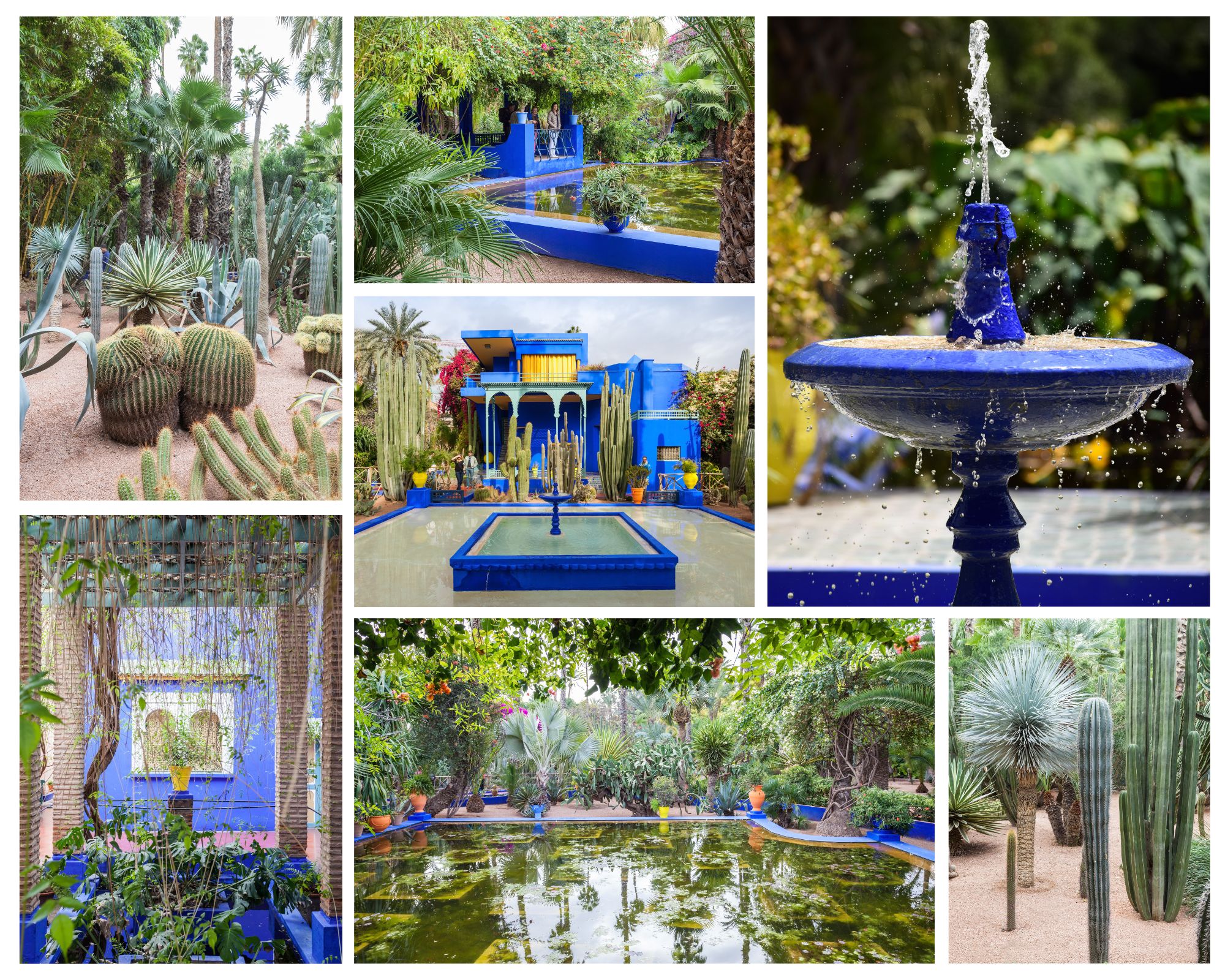
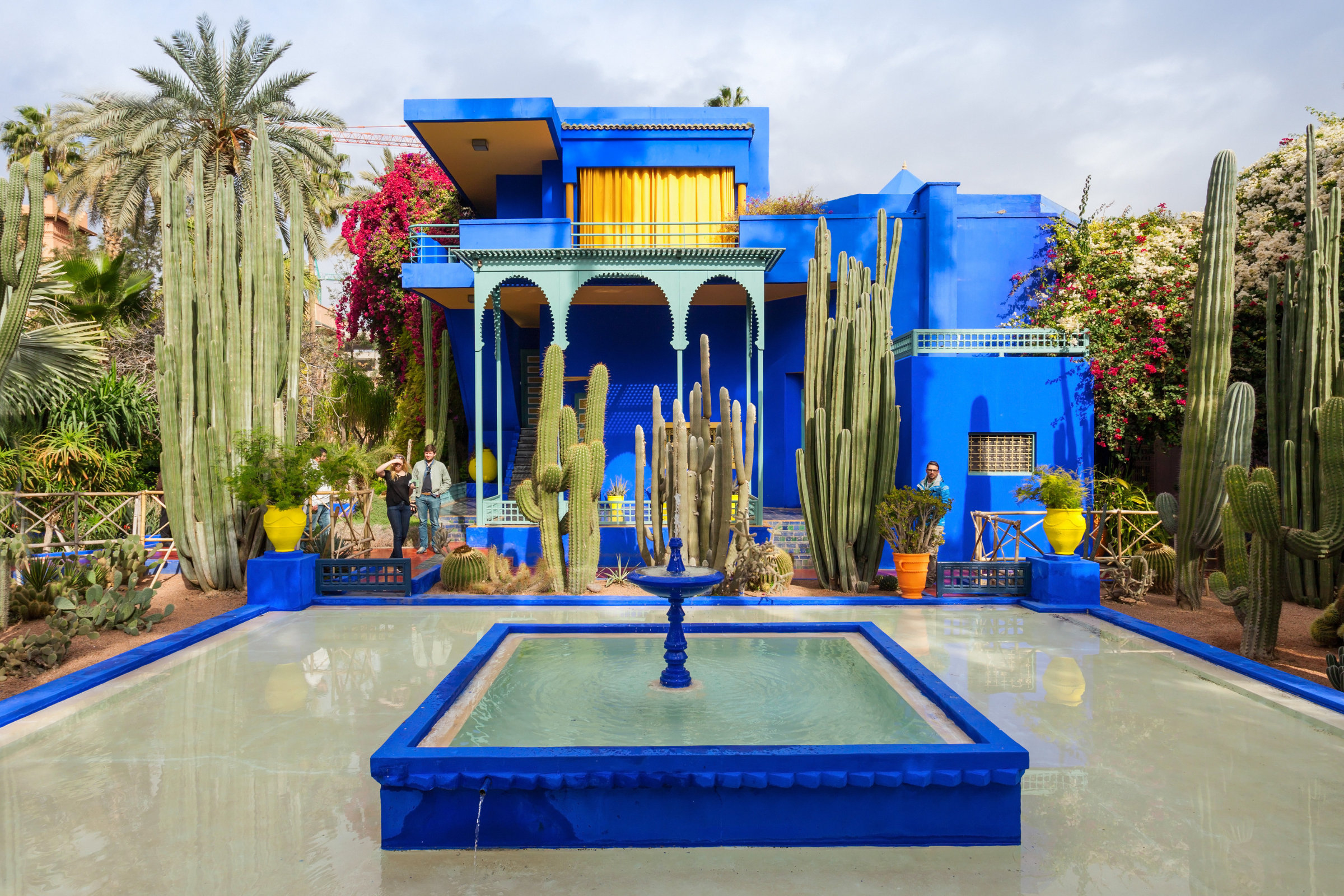
The most famous garden in Marrakech and one of the most visited in Africa, Majorelle Garden was created by French artist Jacques Majorelle who moved to Marrakech in 1919, captivated by the colour and light of Morocco. He spent decades creating a garden unlike anything else in the city and planted cacti, bamboo, bougainvillea, banana trees and coconut palms alongside jasmine, water lilies and giant agaves. He then painted the walls and oversized pots in the vivid cobalt blue that now bears his name.
After falling into disrepair following Majorelle’s death in 1962, the gardens were saved by Yves Saint Laurent and Pierre Bergé, who bought the land to protect it from development. Today the garden also houses the Musée Berbère, a significant collection of Berber artefacts, and the Musée Yves Saint Laurent sits just next door.
Practical notes: The gardens are around ten minutes by taxi from El Fenn, ask at the desk and we’ll arrange a driver. Go early. They draw significant crowds by mid-morning and the experience is entirely different at opening time. The café at Majorelle is a good stop for coffee; for lunch, the quieter café at the YSL Museum next door is a great choice. Between the gardens, the museums and the shops, half a day here is well spent.
2. Le Jardin Secret

If Majorelle is the garden everyone knows, Le Jardin Secret is the one worth seeking out and if you’re staying at El Fenn, it’s also the easiest. Just five minutes on foot from our door, through medina streets that are at their quietest in the early morning, it is one of those places that genuinely makes you forget you are standing in the middle of one of the world’s busiest medinas.
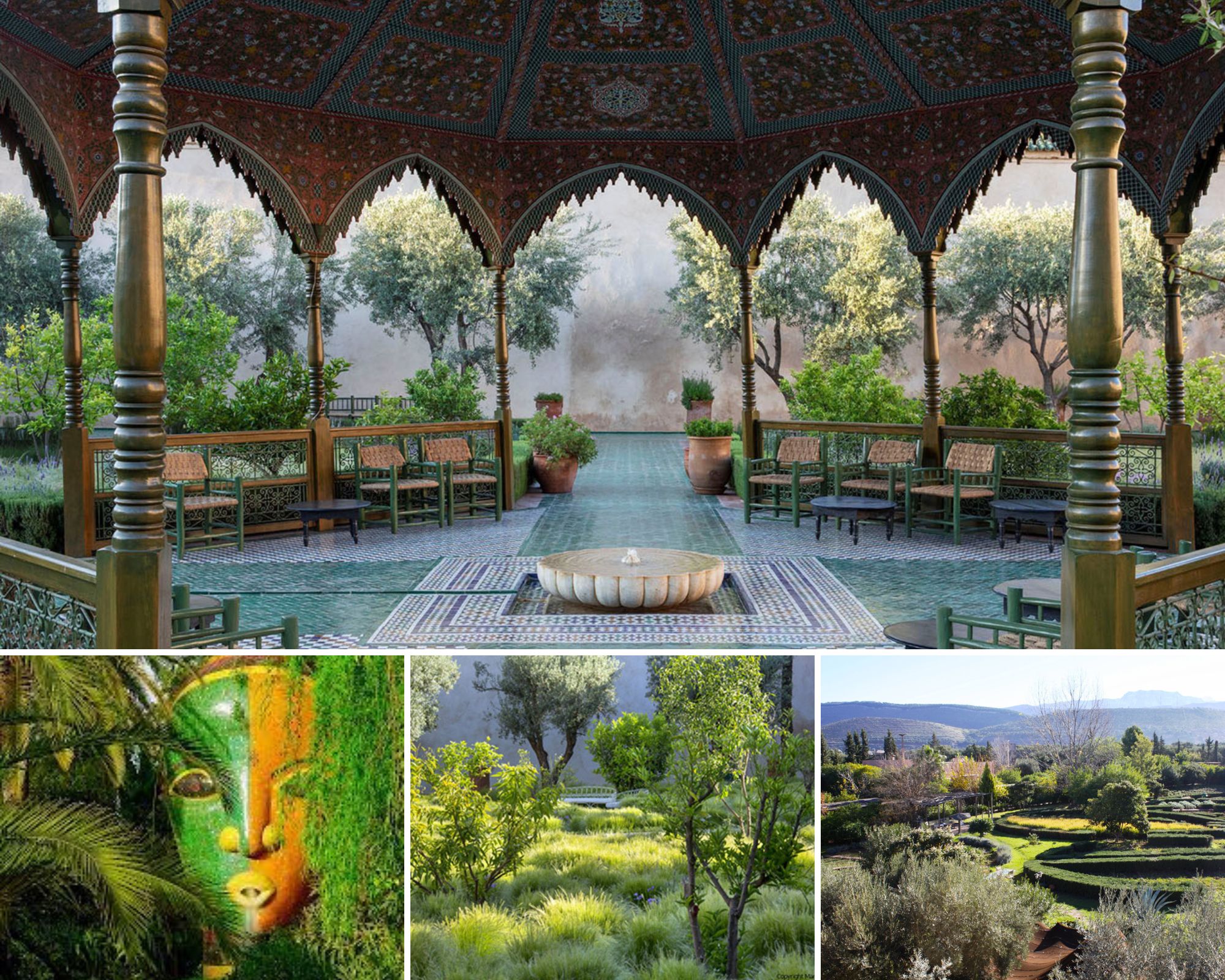
The gardens occupy the grounds of a nineteenth-century palace and contain one of the finest traditional Islamic gardens in Morocco: a formal, symmetrically planted space divided by water channels, with fruit trees, rose beds and a central fountain. In spring, when the roses are in bloom and the light is still soft, there are few better ways to start a day.
Make sure to see that water system that’s on display, modelled on the khettara network that first brought water into the medina in the eleventh century — a rare glimpse into the engineering that secured Marrakech’s position as a city where traders from all over Africa and Europe converged.
Practical notes: Go early, before the souk wakes up. The garden has a good café and works well as a morning stop before a few hours in the medina. Later in the day it draws more visitors but can feel like yours alone in the early morning.
3. Anima Gardens

Created by Austrian multimedia artist André Heller on the outskirts of Marrakech, Anima is one of the most genuinely surprising gardens in Morocco. It sits somewhere between botanical garden and outdoor art installation – giant sculptures, zellige-tiled corners, ponds, gazebos and flowering plants from across the world fill a space that rewards slow exploration. It is playful, vivid and unlike anything else near the city. There’s also some serious art on display.
Practical notes: Around 20 minutes from the medina, best reached by taxi. There is a small café on site. Allow at least two hours. Spring is the best time to visit when the gardens are at their most colourful.
4. The Bio-Aromatic Garden of Ourika

The Ourika Bio-Aromatic Garden sits about 30 kilometres south of Marrakech in the Ourika Valley, at the foot of the Atlas Mountains. One of the first organic aromatic plant growers in Morocco, it has been cultivating medicinal, aromatic and ornamental plants since 1998 and is the birthplace of Nectarome. The guided tours take you through fields of lavender, rosemary, thyme, mint and dozens of other species, with explanations of how each is used in traditional Berber beauty and medicine.
The combination of the garden itself, the Atlas backdrop, workshop options, Berber beauty rituals, henna painting and the shop selling the full Nectarome range makes this one of the most complete half-day excursions from Marrakech.
Practical notes: Best paired with a wider Ourika Valley day, combine with lunch at one of the valley restaurants and a walk by the river. The valley is particularly beautiful in spring when the almond and cherry blossom is still on the trees.
5. Cactus Thiemann

Most people have never heard of Cactus Thiemann. It doesn’t look like much from the road — just a handwritten sign that reads Cacti on the outskirts of the city. What’s behind it is one of the most extraordinary gardens in Africa.
German agricultural engineer Hans Thiemann arrived in Marrakech in the 1960s with a passion for succulents and a belief that the Moroccan climate was the perfect place to grow them. Over the following decades he collected and planted more than 150 varieties of cacti from Latin America, creating a seven-hectare nursery that is now the largest of its kind on the continent. The oldest cactus on the site — a Pachycereus pringlei he brought with him from Europe — is over 80 years old and stands nine metres high. If the plants look familiar, they should: Cactus Thiemann has been supplying cacti to Jardin Majorelle, La Mamounia and other landmark Marrakech gardens for decades.
Since Thiemann’s death in 2001, the nursery has been run by his widow Fatima and their daughters Magda and Roselinde. The guided tours — led by the family — are the best way to visit, and the stories behind the collection are as compelling as the plants themselves.
Practical notes: Located around 10km from the medina on the Route de Casablanca — approximately 20 minutes by taxi. A free shuttle runs from a central Marrakech pick-up point and can be booked in advance via WhatsApp. Lunch can be arranged if requested ahead of arrival and is well worth it. Check opening days before visiting — currently open Wednesday to Saturday. Ask our team to help arrange a driver.
6. Montresso Foundation Sculpture Garden

Less visited than the others on this list, the Montresso Foundation is an art residency and exhibition space beyond the Palmeraie that has quietly become one of the most interesting cultural destinations near Marrakech. The indoor exhibition spaces show work by artists from across Africa and beyond; the sculpture garden outside – a large, planted space dotted with significant works is stunning.
Practical notes: Check the foundation’s programme before visiting, as exhibitions rotate. The combination of contemporary African art, the garden setting and the relative quiet make it a very good counterpoint to a medina-heavy itinerary.
El Fenn: The Courtyards, Colonnade and Rooftop

If you are staying at El Fenn, you’ll be able to immerse yourself in greenery while you’re here.
El Fenn spans eight interconnected riads and five distinct courtyards. The traditional riad courtyard was never decorative, it was functional, philosophical, and deeply intentional. In Islamic architecture, it exists to turn a building inward: away from the noise and heat of the street, toward a private world of shade, water and greenery. The garden comes inside. The sky becomes the ceiling. It is one of the most elegant solutions in the history of domestic design, and in Marrakech it is everywhere, hidden behind doors that give nothing away from the outside.
At El Fenn, our courtyard planting is anything but restrained. Fig trees and mature palms anchor the spaces, with terracotta pots massed at their feet, layered bougainvillea in deep magenta, tumbling plumbago in pale blue, trailing vines that have found their way into the stonework. On the rooftop, we go larger still: olive trees, pink jasmine and more cascading vines across a 1,300 square metre terrace with unobstructed views to the Koutoubia Mosque and the Atlas Mountains. Like everything at El Fenn, we don’t do things lightly. The maximalism is the point.
Then there is the light, which varies according to the time of day and month of the year. It floods the rooftop all day while courtyards merge between sunlight and shade. By sunset,we light everything with scores of candles and lanterns and the hotel is transformed into a completely different experience that what you’ve encountered during the day.
As examples of outdoor living, the spaces at El Fenn are hard to beat. And they’re right outside your bedroom door.
When is the best time to visit gardens in Marrakech?
Spring – from mid-March through May is the best time to visit gardens in Marrakech. Roses bloom from late March, orange blossom follows in April, and the temperatures are warm enough to spend extended time outside without the intensity of summer heat. The light is also at its most flattering during spring mornings and evenings.
How far are Marrakech’s main gardens from the medina?
Le Jardin Secret is five minutes’ walk from El Fenn, inside the medina walls. Jardin Majorelle is around ten minutes by taxi. Anima Gardens is approximately twenty minutes by taxi. Cactus Thiemann is around 10km from the medina on the Route de Casablanca, twenty minutes by taxi, with a free shuttle available. Nectarome and the Ourika Valley are around thirty kilometres south, best treated as a half-day excursion. The Montresso Foundation is in the Palmeraie, fifteen to twenty minutes from the centre.